Short Story Contest 2026

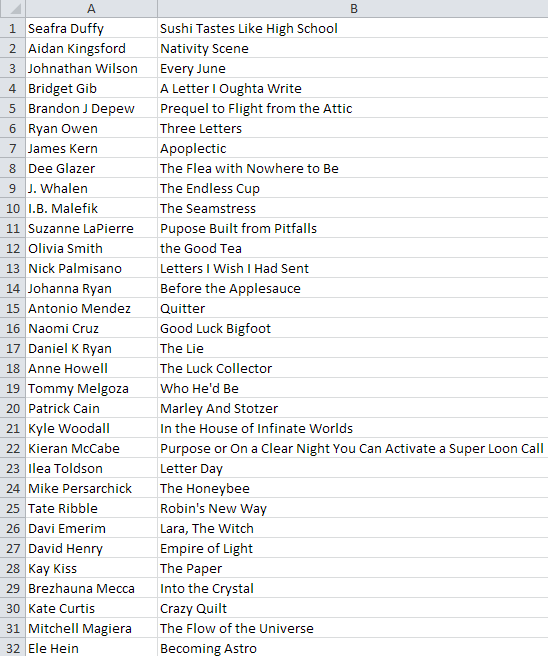
BELOW IS THE FIRST PLACE STORY OF THE 2026 SHORT STORY CONTEST, “The Seamstress” BY I.B. Malefik.
The Seamstress
Act I – The Woman Who Mended Everything
Every morning, before the town remembered to wake, Mariam unlocked the faded blue door of her sewing shop.
The bell above the entrance no longer rang. After years of rust and tropical humidity, it had forgotten its cheerful chime. Now it gave only a soft sigh whenever the door opened, as if even it had grown old alongside the woman beneath it.
Inside, everything waited exactly where she had left it the evening before.
Rows of neatly folded fabric rested on wooden shelves darkened by time. Glass jars held buttons of every colour and shape. Spools of thread stood like quiet soldiers beside the sewing machine that had served her faithfully for more than three decades.
The machine was older than many of her customers.
It had belonged to her husband once.
After he died, Mariam kept the shop open because she knew nothing else.
Some people inherited businesses.
She inherited unfinished stitches.
She placed her handbag beneath the counter, tied a measuring tape around her neck, and ran her fingertips across the sewing machine before switching it on.
Its familiar hum filled the little room.
To most people, it was only a machine.
To Mariam, it sounded like another day of being useful.
By eight o’clock, the first customer arrived.
A mother carrying a school uniform.
“My son caught it on a fence,” she said, pointing at the tear near the pocket. “Can you fix it before Monday?”
Mariam smiled.
“I’ll have it ready tomorrow.”
The woman thanked her, left the uniform behind, and hurried away before Mariam could ask the boy’s name.
That happened often.
People remembered the shop.
Rarely the woman inside it.
Mariam didn’t mind.
She had long accepted that a seamstress belonged in the background of other people’s stories.
Invisible hands.
Quiet work.
No applause.
Only thread.
She folded the uniform carefully onto her worktable.
To anyone else, it was just another piece of fabric waiting to be repaired.
To Mariam, it was a small life about to continue.
And somehow, that had always been enough.
The school uniform was only the first of many garments that found their way onto Mariam’s worktable that morning.
A fisherman came in carrying a faded raincoat with a torn sleeve. He apologized for the smell of the sea before placing it gently on the counter.
”I’ve had this for fifteen years,” he said. “My daughter keeps telling me to buy a new one.”
Mariam examined the rip with careful fingers.
”She’s probably right.”
The old man laughed.
”But this one already knows all my storms.”
She smiled without answering.
Some things were worth keeping, even when they had been worn thin.
Not because they were valuable.
Because they remembered.
By midday, a university student arrived with the hem of a graduation gown coming loose.
”It’s tomorrow,” he said nervously. “I didn’t notice until this morning.”
”You’ll wear it tomorrow,” Mariam assured him. “Leave it with me.”
Relief spread across the young man’s face as though she had done far more than promise to sew a few inches of fabric.
People often left her shop lighter than they had entered.
Not because their clothes had been repaired.
Because someone had quietly told them,
”Don’t worry.”
The afternoon brought a different kind of customer.
An elderly woman unfolded a pale blue dress so carefully it seemed she was handling glass instead of cloth.
“My granddaughter wants to wear this.”
Mariam recognized the dress immediately.
She had made it twenty-seven years ago.
Every dart.
Every pleat.
Every tiny hand-sewn pearl along the collar.
“I wondered if I’d ever see it again,” Mariam whispered.
The woman smiled.
”She says fashions come back.”
Mariam chuckled softly.
”No.”
She ran her fingers across the fabric.
”Love does.”
The customer blinked, then smiled without speaking.
When the shop finally fell silent again, Mariam returned to the dress.
There, hidden inside one of the seams, were her own initials.
M.
Just one letter.
A habit she had never told anyone about.
Not for recognition.
Only because she liked knowing that a tiny part of herself travelled wherever the garment went.
Outside, children laughed on their way home from school.
Motorcycles buzzed past the shop.
Someone across the street lowered the metal shutter of a grocery store.
Another ordinary day.
Another collection of torn sleeves, missing buttons, loose hems and broken zippers.
Nothing that would ever appear in a newspaper.
Nothing anyone would remember years later.
Yet Mariam never rushed her stitches.
She believed every repair deserved the same patience, whether it belonged to a businessman or a child who had climbed one fence too many.
Fabric, she often thought, behaved a lot like people.
Pull too hard, and it tore.
Ignore a small weakness, and it spread.
Handle it with care, and it could last far longer than anyone expected.
She never said those thoughts aloud.
People came for stitches.
Not philosophy.
As the afternoon sunlight slipped through the front window, golden threads danced across the wooden floor.
Mariam watched them for a moment before returning to her machine.
Outside, the town continued with its busy life.
Inside, the steady rhythm of the needle rose and fell like a quiet heartbeat.
One stitch.
Then another.
And another.
She had spent thirty-four years believing that was all she would ever leave behind.
She had no idea how wrong she was.
***
Act II – A Life Measured in Stitches
By the end of each week, Mariam’s shop held more stories than clothes.
Some arrived neatly folded in reusable shopping bags. Others came crumpled inside plastic sacks, smelling of rain, perfume, engine oil, seawater, or freshly cut grass. Every garment carried traces of the life it belonged to.
Mariam had learned long ago that fabric remembered.
It remembered celebrations.
It remembered grief.
It remembered the shape of the person who had lived inside it.
She never asked unnecessary questions.
People usually told their stories anyway.
Sometimes while she measured sleeves.
Sometimes while she pinned a hem.
Sometimes simply because silence felt too heavy.
One Tuesday morning, a young mother stepped inside carrying not clothes, but a folded piece of paper.
”I need something made,” she said, almost apologetically.
She unfolded the sketch.
It was a pair of denim overalls unlike anything Mariam had ever seen.
Small pockets covered the front.
Larger pockets lined both legs.
One pocket hid inside another.
Some fastened with buttons.
Others with tiny zippers.
Each was marked with a small embroidered picture—a pencil, a toy car, a notebook, coloured crayons, a whistle, even a tiny dinosaur.
”My son has ADHD,” the mother explained quietly. “He loses everything.”
She smiled, though exhaustion lingered behind her eyes.
”Every morning begins with us searching for pencils, erasers, little toys... Sometimes even his glasses.”
Mariam studied the drawing.
”He remembers pictures better than words,” the woman continued.
“I thought... perhaps if every pocket had its own picture...”
”...he might remember where things belong.”
The sentence faded into hope.
Mariam looked at the sketch once more.
”It isn’t an ordinary overall.”
The mother’s shoulders sank.
”I know.”
”But,” Mariam said gently, “it can be made.”
Two weeks later, the little boy marched into the shop wearing the finished overalls.
He immediately reached into a pocket marked with a tiny embroidered pencil and pulled out exactly that.
Then a toy car.
Then a notebook.
Each object appeared exactly where he expected.
”I found it!” he shouted proudly.
His mother’s eyes filled with tears.
”You don’t know what this means.”
Mariam only smiled.
”It looks like he does.”
The boy wrapped his arms around her waist before running outside again.
Long after they had gone, Mariam found herself smiling at the
empty doorway.
Sometimes sewing was less about fabric...
...and more about understanding the person who would wear it.
Not every customer needed a perfect fit.
Some needed to feel understood.
The weeks rolled on.
A teenage girl brought in the sleeve of her debate blazer just days before a national competition.
”I tore it climbing over the school gate,” she admitted, cheeks burning with embarrassment.
Mariam repaired the sleeve so carefully that even under sunlight the tear disappeared.
The girl stared at it in disbelief.
“I can’t even see where it was.”
“Neither will anyone else,” Mariam replied.
The girl smiled with visible relief.
“Thank you.”
Months later, a postcard arrived from another city.
On the front was a photograph of a university campus.
On the back were only eight words.
I won the debate. Thank you for believing me.
Mariam placed the postcard inside a biscuit tin beneath the counter.
She never displayed such things.
They felt too personal.
By Friday afternoon, a man in his sixties entered carrying a carefully wrapped suit.
”My son’s funeral is tomorrow.”
The words hung in the air.
”I’ve lost weight,” he continued softly.
”The suit doesn’t fit anymore.”
Mariam measured him without speaking.
Grief had already taken enough from him.
It did not need conversation too.
She worked late into the evening.
When he returned the next morning, the suit rested neatly inside a garment bag.
”It fits,” he whispered after trying it on.
He reached for his wallet.
Mariam shook her head.
”Not this time.”
For a long moment neither of them spoke.
Then the man simply nodded.
Some gratitude could never be translated into words.
That evening, Mariam locked the shop later than usual.
She watched the last streaks of sunlight stretch across the wooden floor before switching off the lights.
Tomorrow, someone else would walk through the faded blue door.
Another torn sleeve.
Another broken zipper.
Another dress carrying someone’s happiest day.
Or worst.
The sewing machine never chose between joy and sorrow.
It welcomed both with the same steady rhythm.
Needle down.
Needle up.
Thread pulled tight.
Again.
Again.
Again.
Years passed that way—not in calendars, but in stitches.
Mariam never counted how many garments she had repaired.
She only hoped each one returned a little stronger than it arrived.
She believed that was enough.
She never imagined that, somewhere beyond the walls of her little shop, hundreds of lives were quietly carrying a piece of her work with them.
And without knowing it...
They were carrying a piece of her, too.
Near the end of every month, a delivery rider stopped by with the same green work jacket.
The reflective strip across the back always came loose.
“The roads are rough,” he said with an apologetic grin. “My wife says I should buy a new one.”
Mariam ran her fingers over the worn fabric.
”It still has years left.”
He laughed.
”So do I, I hope.”
She reinforced every seam with stronger thread than before.
When he reached for his wallet, he noticed the extra stitching.
”You didn’t have to do that.”
”I know.”
He smiled.
”Thank you for making sure I get home.”
For a brief moment, Mariam watched him disappear into the afternoon traffic.
She hoped the stronger seams would hold.
Not because of the jacket.
Because someone was waiting for him at home.
One rainy afternoon, a little girl arrived carrying a stuffed rabbit with one ear hanging by a single thread.
”My grandma said you fix everything.”
Mariam accepted the toy with the same care she gave wedding dresses.
The rabbit had faded over the years.
Its white fur had become cream.
One button eye was newer than the other.
The stuffing had settled unevenly inside its tiny body.
”It has been with me since I was born,” the girl explained.
”I can see that.”
She washed the rabbit gently, replaced the worn stuffing, strengthened every seam and reattached the ear with tiny invisible stitches.
When the little girl returned, she hugged the rabbit tightly before hugging Mariam.
”It smells clean,” she whispered happily.
After they left, Mariam realized she had spent almost three hours repairing a toy.
She had charged only enough to cover the thread.
Some things were never measured by money.
Only by the love they carried.
There were evenings when the shop grew so quiet that the ticking wall clock became louder than the sewing machine.
On those evenings, Mariam often looked around the tiny room.
Shelves.
Threads.
Needles.
Scissors.
Patterns folded into careful squares.
Nothing inside the shop appeared extraordinary.
Yet every object had witnessed someone’s beginning.
Someone’s ending.
Or the ordinary days in between.
She sometimes wondered how many lives had briefly passed through her hands.
Hundreds?
Perhaps thousands.
She would never know.
Nor did she think it mattered.
The work itself was enough.
One careful stitch after another.
As though every repaired seam was her quiet promise to the world—
that broken things, when treated with patience and care, could still be made whole again.
***
Act III – The Loose Thread
The call came on a Thursday morning.
Mariam almost ignored it.
Thursday was always her busiest day, and she had three dresses waiting to be hemmed before noon.
The phone rang again.
She wiped a loose thread from her fingers before answering.
”Mrs. Mariam?”
”Speaking.”
”This is Dr. Farid from Sungai Merah Medical Centre. We have the results of your tests.”
There was a pause.
”We’d like you to come in today.”
His voice was calm.
Too calm.
She had heard that tone before.
Not from doctors.
From herself.
It was the voice she used whenever a customer brought in a garment too badly torn to be repaired.
The clinic smelled of antiseptic and freshly brewed coffee.
Outside the consultation room, a television played a cooking programme that nobody seemed to be watching.
A young couple sat across from her.
The woman rested her hand on her swollen belly.
The man held it tightly.
Life beginning.
Life waiting.
Mariam looked down at her own hands.
The tiny scars on her fingertips had faded over the years, but they had never disappeared.
Every needle had left its mark.
”I’m afraid the scans confirmed what we suspected.”
Dr. Farid placed the images on the lightbox.
A pale shadow bloomed inside them.
”It is cancer.”
The word landed softly.
Far more softly than Mariam had imagined.
She had expected thunder.
Instead...
Only silence.
”We’ve caught it...”
He hesitated.
”...later than we would have liked.”
The room became strangely distant.
She heard the ticking of the wall clock.
The air-conditioner humming.
Someone laughing in the corridor.
The world, it seemed, had forgotten to stop.
”What happens now?” she asked.
”We’ll discuss treatment.”
He explained surgery.
Chemotherapy.
Medication.
Appointments.
Percentages.
Possibilities.
She listened politely.
But one question echoed louder than everything else.
How much time?
Perhaps the doctor saw it in her eyes.
“We cannot predict exactly.”
He folded his hands.
“But if I were you...”
Another pause.
“...I would spend more time with the people who matter.”
The afternoon sun felt unusually bright.
She walked back to her shop instead of taking a taxi.
The familiar streets looked unchanged.
Children chased one another outside a convenience store.
Someone argued cheerfully over the price of mangoes.
A bicycle bell rang somewhere behind her.
Life continued with remarkable confidence.
As though it had never heard the word cancer.
She unlocked the faded blue door.
The bell sighed.
Just as it always had.
Inside, everything waited faithfully.
The jars of buttons.
The folded fabrics.
The measuring tape.
The old sewing machine.
She rested both hands upon it.
For thirty-four years, this machine had repaired torn things.
It had never once failed her.
If only flesh could be mended as easily as fabric.
She sat without switching it on.
The silence felt unfamiliar.
For the first time in decades...
No needle moved.
No thread tightened.
No cloth slipped beneath her hands.
Only stillness.
Her eyes wandered around the tiny shop.
What would happen to all of this?
The shelves.
The scissors.
The patterns.
The machine that still carried her husband’s fingerprints somewhere beneath its worn paint.
Would someone buy them?
Throw them away?
Forget them?
The thought surprised her.
She was not afraid of dying.
She was afraid of disappearing.
Becoming another name that faded quietly from memory.
She thought of the garments waiting in the basket beside her worktable.
The graduation gown.
The delivery rider’s jacket.
A flower girl’s dress with three missing buttons.
An old cushion cover a widow insisted could not be replaced because her late husband had embroidered one corner by hand.
Tomorrow, each owner would return expecting their belongings to be ready.
For the first time in thirty-four years, Mariam wondered if she would have to disappoint someone.
The thought unsettled her more than the diagnosis itself.
She had always believed that keeping a promise was as important as making one.
A loose hem could wait.
A broken zipper could wait.
But trust—
once torn—
was far more difficult to mend.
She reached for her notebook and turned to a fresh page.
Instead of writing a list of alterations, she began writing names.
Customers whose faces she remembered.
The little boy with the many pockets.
The fisherman with the weathered raincoat.
The debate champion.
The father in the black suit.
She stared at the list for a long time.
Had she truly remembered them...
or had they already forgotten her.
The question lingered in the quiet room, unanswered.
That evening she opened the biscuit tin beneath the counter.
Inside lay old receipts.
A handful of photographs.
The postcard from the girl who had won the debate.
A dried flower pressed between two envelopes.
Nothing extraordinary.
Just fragments of an ordinary life.
She smiled sadly.
”Perhaps...”
she whispered into the empty shop,
”...this was all I was ever meant to be.”
Outside, evening settled over the town.
Inside, one loose thread rested on the wooden table.
Mariam reached for the scissors.
Then stopped.
For reasons she could not explain...
She left the thread exactly where it was.
***
Act IV – What She Never Knew
The following Monday, Mariam unlocked the shop as she always had.
The faded blue door sighed open.
The sewing machine waited.
The basket of unfinished garments remained beside her chair.
For a while, nothing seemed different.
Then someone knocked.
It was the little boy with the many-pocketed overalls.
Only this time, he wasn’t carrying clothes.
He rushed straight to Mariam and wrapped his arms around her.
”I wanted to show you.”
He proudly reached into one pocket after another.
A pencil.
A ruler.
A small notebook.
Two toy dinosaurs.
Nothing was missing.
The denim had faded from countless washes.
Several pockets were stained with ink.
One corner had been clumsily stitched by his mother after catching on a nail.
”They’re his favourite clothes,” the mother said with a tired smile.
”He refuses to wear anything else.”
She paused.
”His teacher says he loses almost nothing now.”
The woman took a deep breath.
”You didn’t just sew pockets.”
”You gave my son confidence.”
After they left, Mariam gently touched one of the tiny embroidered stars.
She had never imagined that a few extra pockets could become part of a child’s future.
Before she could gather her thoughts, another customer appeared.
A young doctor stepped quietly into the shop.
He placed an old school uniform on the counter.
The fabric had yellowed with age.
The pocket still bore the careful stitches Mariam had sewn years before.
”I don’t suppose you remember this.”
Mariam smiled apologetically.
”I’m afraid I don’t.”
”I do.”
He laughed softly.
“My family lost everything in a house fire.”
“We couldn’t afford another uniform.”
“I was too embarrassed to go back to school.”
He ran his fingers across the repaired pocket.
“My mother brought it here.”
“You fixed it without charging her.”
He looked at Mariam.
”The next week, I went back to class.”
He smiled.
”I almost became a school dropout.”
Instead...
”I became a doctor.”
Silence settled gently between them.
”I’ve treated thousands of patients,” he continued.
”But I often wonder...”
”How many of them are alive because you repaired one school uniform.”
Mariam lowered her eyes.
For the first time in many days...
She found herself unable to speak.
That afternoon, an elderly woman arrived carrying a carefully folded white garment bag.
Inside lay a wedding dress
Time had softened the ivory lace into the colour of old pearls.
”You made this,” she said.
”My daughter wore it last Saturday.”
She handed Mariam two photographs.
The first showed a young bride from twenty-five years earlier.
The second showed another bride.
The same smile.
The same dress.
Two generations.
“My daughter wanted a new gown.”
The woman smiled.
“Then she found this one in the attic.”
Mariam traced the delicate lace with trembling fingers.
“I never thought I’d see it again.”
”You didn’t.”
The woman shook her head gently.
”You saw it begin a second life.”
Near closing time, the grieving father returned.
He was no longer wearing the black suit.
Instead, he carried it folded over one arm.
”I wanted you to have this.”
Mariam looked confused.
“I don’t understand.”
“My son always admired people who worked with their hands.”
He smiled sadly.
“When everyone else noticed my suit...”
“...I remembered the woman who quietly made sure I could say goodbye to him with dignity.”
He bowed his head.
“You refused my payment.”
“So please...”
“...allow this old man to thank you properly.”
Mariam accepted the suit with both hands.
Not as a gift.
But as a memory entrusted to her keeping.
The days that followed brought more visitors than garments.
A retired fisherman stopped by wearing the same weathered raincoat.
”It survived another monsoon,” he said proudly.
The young woman with the once-torn debate blazer mailed another postcard after graduating from law school.
The little girl returned, now taller, still carrying the rabbit whose ear had never come loose again.
Each story arrived quietly.
None of them extraordinary on their own.
Together...
They formed something Mariam had never seen before.
A life.
Not measured in years.
Nor in money.
But in moments when another person had walked away feeling lighter, stronger, or simply less alone.
That evening, after the last visitor had gone, Mariam sat beside her sewing machine.
Sunlight spilled across the wooden floor, catching the loose thread she had left untouched days earlier.
She picked it up between her fingers.
For years, she had believed she spent her life stitching torn fabric.
She had been wrong.
Without ever realising it...
She had stitched dignity into a grieving father.
Hope into a frightened student.
Confidence into a little boy with too many pockets.
Love into a wedding dress worn across generations.
She smiled through quiet tears.
At last, she understood.
Purpose was rarely found in grand achievements.
More often...
it was sewn into ordinary days, one careful stitch at a time.
***
Act V – One Thread at a Time
Mariam passed away quietly three months later.
The faded blue door of her little shop remained closed for weeks.
Then, one Saturday morning, the townspeople gathered with something unusual in their hands.
Not flowers.
Not wreaths.
But pieces of fabric.
A patch from a school uniform.
A square cut from a weathered raincoat.
A pocket from a pair of denim overalls stitched with tiny embroidered stars.
A fragment of lace from a wedding dress.
A sleeve from a black suit.
Each piece had once rested beneath Mariam’s careful hands.
Together, they stitched them into a single patchwork quilt.
It was placed on the wall of the town library, where anyone could see it.
Children stopped to admire its colours.
Parents told stories.
Grandparents smiled at memories sewn into every square.
Beneath it hung a small brass plaque.
It read:
”Some people spend their lives searching for a purpose.
Others quietly become part of someone else’s.”
Years later, people no longer remembered every garment Mariam had repaired.
But they remembered how she had made them feel—seen,
valued,
and whole.
And perhaps that was the strongest thread a person could ever leave behind.
BELOW IS THE FIRST PLACE STORY OF THE 2026 SHORT STORY CONTEST, “The Honeybee” BY Mike Persarchick.
BELOW IS THE Third PLACE STORY OF THE 2026 SHORT STORY CONTEST, “Becoming Astro” BY Ele Hein.
Rule 1: Astro Does Not Talk
I first met Astro when I was seven. Dad got free tickets through his work to see the crosstown match for two local basketball teams - the Reapers versus the Comets. The Reapers were the town favorite, but dad always loved an underdog, and anything he loved was a love of mine, too.
I recall very little of the game outside of the general overwhelm. Tall ceilings. Bright lights. People dressed in reaper costumes making loud cries and boos and screams. I don’t remember the halftime show. I don’t remember the players. I don’t even remember who won.
I do remember Astro.
Astro was the mascot for the Comets. For some reason, they were a cat, not a comet. I suppose a comet doesn’t make a very good mascot.
[Years later I would learn the lore: a stray, black cat crossed the court during a match in the team’s early years and, having lost most games and every tournament prior, was credited for their miraculous victory at the championship that season. Thus the black cat Astro was born.]
Astro was my favorite part of that first game with my dad. When the noise and lights and energy became too much for me, I escaped the court only to run into Astro. The cat looked at me and seemed to sense my internal panic, my need for everything to be less for just a moment. They knelt to my eye level and extended their arms. When I stepped forward, they placed a paw on either side of my face. Soft earmuffs silenced the turmoil. The whole world took a deep breath. Dad caught up to me to find me hugging Astro. They didn’t say anything. I was grateful for that.
There was a picture of the three of us a security guard took that hung above my desk all through school.
…
The rest of the school years passed quickly and by the time I was a university student, I had lost that optimistic shine I’d had before the world humbled me. Dad had died suddenly around that time and the funeral costs stacked neatly on top of every other cost of living. I worked long hours between classes and the fast coffee joint next to the school, not to mention taking on odd jobs here and there. Anything to keep the coffee in my cup, the skin on my back, and the tuition within federal loan limits. Folding laundry in the early hours for the Marriott. Sorting dirt samples for my department lab. Shoveling snow for the woman at the end of the street.
Sometimes I think it was fate that brought me back to Astro, but more realistically, it seems like it was statistically bound to happen one way or another.
Angie Maris knew me from a writing class I’d taken on a whim. She was mysterious in a fun way that made us almost-friends, which was as close to best friends as I was with anyone. On a Tuesday in early December, she asked me for the favor that would change my life.
“You can’t tell anyone,” Angie said from across the dining hall table, more serious than I had ever seen her. I wondered if this would become a chapter in a documentary someday that I would watch with other almost-friends who would mock me for having never seen the signs.
“Who would I even tell,” I responded. Because, truly, who was there for me to tell?
As it turned out, Angie had a secret job and also a wealthy family. The secret job had odd hours and her family had an annual holiday trip that she absolutely did not intend to miss. So her request was a simple one: $150 cash to cover her job until she got back from her trip.
I didn’t ask what the job was. Angie was a natural storyteller with a penchant for the dramatic, so I did not need to ask what it was. I waited until she leaned in with a conspiratorial curl to her lip and whispered in my ear, “Thanks, Astro.”
…
The costume was big and more than a bit awkward, which was fine because it was not unlike how I felt in my own body most days anyway. The shoes were three times the size of my normal feet and Astro’s head was actually foam formed around a hockey helmet with dark netting over the mouth to see from.
Angie helped adjust the head so it was straight, though it still felt crooked from where I was inside. “The game is on Saturday,” she was saying, though the sound was muffled. “All you have to do is go out there, be a bit goofy, and maybe mess around with a few people.”
She took a step back and, through the mesh of Astro’s mouth, she looked pleased (with herself or with me, I might never know). On the way to the “secret hideout”, Angie had explained to me how she had applied for the mascot job a year ago because it sounded new and exciting. I couldn’t blame her, especially when I learned she got a few thousand per year as a stipend for it.
“It’s easy and pretty fun. Like getting to be the person you always wanted to be but can’t because it’s embarrassing. Like all of the social pressure is just gone, y’know?” Her hands illustrated the point with a twinkling “poof” motion of her fingers.
I distinctly remember hating how true that felt. I had opened my mouth to say as much when she lunged forward, placing her hand over Astro’s mouth as if that was not my only means of sight.
“There is only one thing you must remember,” she hissed, taking on that uncharacteristically serious tone once again. “Astro does not talk.”
I nodded in response, stiff from her sudden weight leaning on me and the awkward way the helmet felt like it might shift too far one way or the other, like trying to balance a vase of water on the crown of my head.
The rule made sense, though, when I thought about it. Astro’s mouth did not move, so how would they talk? Children were scared enough of mascots as it was - they didn’t need a weird voice coming from the human within.
When the game came and went, I found I quite enjoyed this gig, more than any of the others I had taken on. I got back to the hideout and removed the helmet, letting Astro’s head (and my own) breathe for a long moment.
The quiet was nice, after the excitement of the game. I’m not sure what came over me, maybe nostalgia or maybe a need for some type of healing I might never be able to explain, but I sat there for a long, long time, until the car lot was empty and the last lingering fans had stumbled home, just sitting there with Astro’s paws on either side of my face. The muffled silence felt like home.
Rule 2: Astro is an Optimist
No one plans for the world to end. I’m certain of that because, when it ended, it was just past 2pm on a Monday and I didn’t get to buy my fucking groceries. To be fair, I had been on the couch contemplating what groceries I should get for the better part of the day when I really should have been searching for jobs.
I’d graduated a few years before and found myself in and out of work. The one constant was Astro. Angie had set me up with the management team for the Comets after that first time and it became my most enjoyable sidegig. It was the greatest gift she could have given me.
Full-time jobs were painful. Keeping up with bills was difficult. Coping was near impossible. But being Astro was easy.
The world ended on a Monday and I nearly ended with it, except that there was a pickup game scheduled for that evening and I wasn’t 100% certain the world had actually ended and wouldn’t just pick itself up again within the next hour, so I used the distraction of news alerts and tornado sirens to separate myself from the living room to make the 10 minute bike ride to Astro’s hideout.
I suppose that is around the time the pieces started to fall in place for me. The world was ending and it might be for real.
The train was down. Crowds formed in the parking lot of the grocery store (I kicked myself again for putting it off). The skyline was invisible behind a veil of smoke. Every once in a while, an echoing bang would sound in the distance.
So I parked my bike by the arena’s security lot and made my way to the hideout. I was grateful for the quiet familiarity of the space and that was where I let myself finally focus on my thoughts, incoherent as they were.
Because the reality of no one planning for the world to end is that, if and when it does, no one really knows what to do about it. Personally, I had no family to reach out to. I was certain any of my almost-friends had more-than-almost-friends to turn to. Regular responsibilities seemed kind of obsolete.
I sat there in silence for a long time because I really didn’t know what to do. Sometimes, when a person does not know what to do, they do what is familiar. So I let my mind shift into automatic, let myself exist in this space in the only way I knew how. Astro’s paws hugged my hands and the helmet dampened the sounds of confusion around me. It felt like any other day. Just a Monday with Astro.
…
It felt strange to step outside of the arena as Astro. But it felt less strange than stepping anywhere as myself. It wasn’t that surprising when I considered that Astro had a job and I did not.
I could have laughed so hard that it might have brought me to hysterics, but I could not, because Astro does not talk and they certainly do not lose their shit because the air smells like smoke and sirens are screaming down every main street and the dust in the distance flashes like lightning or maybe something worse.
For an amount of time that felt simultaneously like seconds and weeks and years and millennia, I just walked. The ground felt different, being outside in Astro’s big feet, and it was cathartic in the strange way that mascotting during an apocalypse probably ought to be for someone like me.
I found myself back near my apartment but unable to go in because it wasn’t Astro’s apartment and I realized around then that my bike was still back at the arena and it was probably rather bazaar that I was dressed as a cat mascot in this situation at all.
Before I could spiral too much from that realization, I was aware of a man and his son standing some ten meters away from where I was. The man was watching the sky with a look of hopelessness and uncertainty that seemed appropriate under the circumstances. His son was
crying and tugging on his hand, seemingly just to remind him that his father was there and not necessarily to pull him in any direction.
I could sense the moment the child became aware of me standing there. There was a palpable shift in the energy in that moment as the boy gave a final tug of his father’s hand and pointed at me with a wide grin.
“It’s Astro!” He jumped up and down several times before he darted to my side, digging his fingers into the fur of Astro’s legs. “Astro is here! Astro is here!”
I rested a paw on the boy’s head, hoping it might be comforting. Familiar.
The father looked at me, not hiding the full up-and-down stare that I can admit was fully warranted. His mouth was parted, maybe in surprise or maybe just to avoid the smell of smoke in the air.
“See, dad? Astro is going to save the day!”
Something changed in the man’s posture. Like sand settling after a wave. “Yeah,” he sighed. “It’s going to be okay.”
Rule 3: Astro Never Gives Up
The world began again some time after it ended. I should never have been surprised, in retrospect - life has its cycle and, whether we like it or not, the truth is that everything at any given moment either ends or doesn’t.
People talk a lot about the “before”, whether mourning or critiquing it, and that has led to change and growth and a feeling of rebirth.
Astro has been a constant through it all, a cryptid in some stories and a hero in others. The mysterious cat is known to appear during dire times, comforting children and boosting morale when hope falters.
I find myself living more as Astro now than as whoever I was before. I’ve found a purpose. Astro can’t save the world, but they keep showing up and trying to make a difference, and no one has been more inspired by that than me.
The Comets no longer exist as a basketball team. Many people do not even remember that Astro was a team mascot to begin with. It doesn’t matter to me - Astro looks to the future and does not linger on the past.
I sit in the hideout on quiet days (especially on the hot, summer ones) to let myself breathe. If I think back to that first game with my dad, I can put my hands on either side of my face and remember that sense of calm. Hear the muted sounds of existing all around me.
And Astro reminds me that everything is going to be all right.